
Ekadashi Calendar for 2027

The Vaishnava calendar lists 25 Ekadashi fasting days in 2027 for Kyiv. The first is 3 January (Saphala Ekadashi) and the last is 23 December (also Saphala Ekadashi). June has three fasting days: 1, 14 and 30 June.
Ekadashi is the eleventh lunar day, or tithi, in each half of the lunar cycle. In the Vaishnava tradition it is a time for fasting, prayer and spiritual practice. You might set aside a few minutes for quiet meditation or do a kind thing you have been putting off.
Dates and times · Ekadashi by month · How to read the calendar
Ekadashi dates and fast-breaking times for Kyiv
Parana is the time for breaking the fast. The table lists the fasting day and the date of parana separately. All times are local to Kyiv and come from the GCal 11 Vaishnava calendar.
| Fasting date | Ekadashi | Date and time for breaking the fast |
|---|---|---|
| 3 January, Sunday | Saphala | 4 January, 07:58–10:41 |
| 19 January, Tuesday | Pausha Putrada | 20 January, 07:48–10:42 |
| 2 February, Tuesday | Shattila | 3 February, 07:30–10:22 |
| 17 February, Wednesday | Jaya (Bhaimi) | 18 February, 07:04–10:29 |
| 3 March, Wednesday | Vijaya | 4 March, after 10:33 |
| 18 March, Thursday | Amalaki | 19 March, 06:03–10:05 |
| 2 April, Friday | Papamochani | 3 April, 06:47–10:51 |
| 17 April, Saturday | Kamada | 18 April, 05:58–10:38 |
| 2 May, Sunday | Varuthini | 3 May, 05:30–10:26 |
| 16 May, Sunday | Mohini | 17 May, 05:08–10:19 |
| 1 June, Tuesday | Apara | 2 June, 04:51–06:00 |
| 14 June, Monday | Nirjala (Pandava Nirjala) | 15 June, 05:45–10:14 |
| 30 June, Wednesday | Yogini | 1 July, 04:50–10:17 |
| 14 July, Wednesday | Devshayani (Shayana) | 15 July, 05:03–10:23 |
| 30 July, Friday | Kamika | 31 July, 05:23–10:30 |
| 12 August, Thursday | Shravana Putrada (Pavitraropana) | 13 August, 07:06–10:35 |
| 28 August, Saturday | Aja (Annada) | 29 August, 06:07–07:07 |
| 11 September, Saturday | Parsva (Parivartini) | 12 September, 06:28–10:45 |
| 26 September, Sunday | Indira | 27 September, 06:51–10:49 |
| 11 October, Monday | Papankusha | 12 October, 07:14–10:54 |
| 25 October, Monday | Rama | 26 October, 07:37–11:00 |
| 9 November, Tuesday | Devutthana (Utthana, Prabodhini) | 10 November, after 11:56 |
| 24 November, Wednesday | Utpanna | 25 November, 07:27–10:18 |
| 9 December, Thursday | Mokshada | 10 December, 07:46–10:29 |
| 23 December, Thursday | Saphala | 24 December, 07:57–10:37 |
For 4 March and 10 November, GCal gives only the time after which the fast can be broken.
Ekadashi follows the lunar cycle, while Gregorian months have their own boundaries. That is why the number of fasting days in a month can vary. In June 2027 there is Apara at the start of the month, Nirjala in the middle and Yogini on the last day.
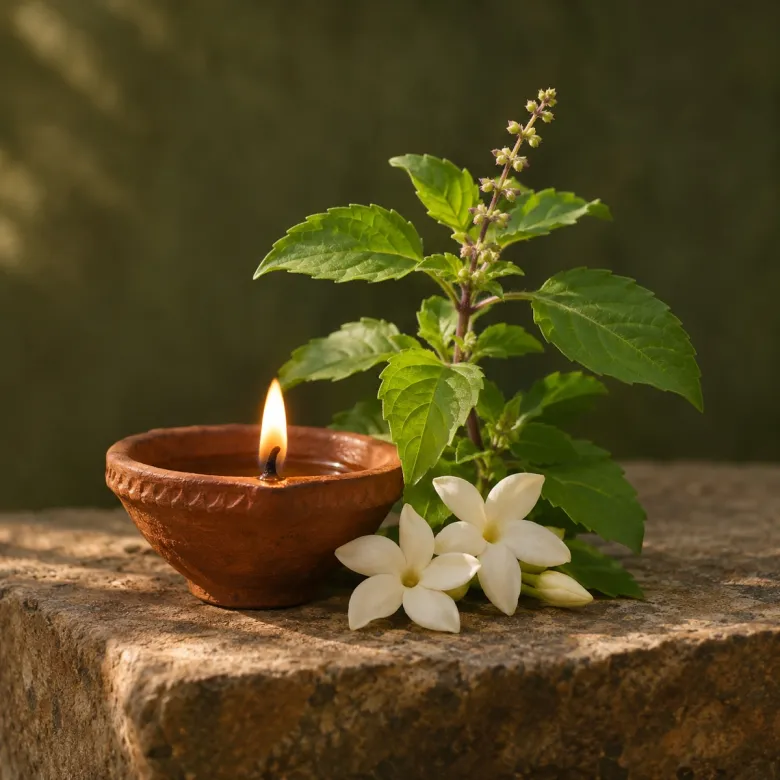
Ekadashi by month
Alongside each date you’ll find short stories from the Vaishnava tradition and ideas for personal practice. Start with whatever feels relevant to you today.
January
Saphala, 3 January. In the story of Saphala, one night changes Lumpaka’s life. At the start of a new year, the story reminds us that change can grow out of something small. Think of one habit that supported you last year and ask whether there is room for it this year.
Pausha Putrada, 19 January. In traditional stories, Putrada is associated with prayers for children. Choose something simple to do as a family: spend a few moments in silence together, remember someone who cared for you or make time to talk to a relative.
February
Shattila, 2 February. Sesame has a special place in the traditions of this day, including the custom of giving it as a gift. Let the theme of generosity suggest one thing you can do. Sometimes the most precious things we can share are time and attention.
Jaya, 17 February. Victory is the theme of this day. In daily life it might begin with a short pause before a sharp reply. Stay with that pause for a moment and listen for what you really wanted to say.
March
Vijaya, 3 March. The story of Vijaya tells how Rama observed a fast before crossing the ocean. If something has been waiting for you to act, set aside a few quiet minutes to work out where you can begin.
Amalaki, 18 March. Traditional stories associate this day with the amalaki tree. In spring, it is a good excuse to go for a walk and notice what has changed around you in the last few days.
April
Papamochani, 2 April. You might think of a situation you wish you had handled differently. If there is something you can put right, start with a small step. Sometimes a sincere apology is enough.
Kamada, 17 April. This day is traditionally associated with wishes. Which of your wishes would still matter if no one else knew about it? That question can be a place to start your meditation.
May
Varuthini, 2 May. The story of Varuthini reflects on different ways of giving. You might share something another person genuinely needs, whether it is a meal, something you know or an hour of practical help.
Mohini, 16 May. Pay attention to what most often distracts you. Put your phone away during a walk and notice where your thoughts go when you have no need to hurry.
June
Apara, 1 June. If an important thought was left unsaid in a conversation, consider how you might return to it with respect and without rushing.
Nirjala, 14 June. In the Vaishnava tradition, Nirjala is known for its strict form of fasting. You can devote the day to prayer, reading or meditation.
Yogini, 30 June. At the end of the month, you could set aside an evening for silence and notice how you feel after busy days. The Yogini fast is broken on 1 July.
July
Devshayani, 14 July. In a Vaishnava story, Vishnu enters yogic sleep on this day. Think of that story if you feel ready to slow down and return to regular meditation.
Kamika, 30 July. One traditional image of Kamika is a tulsi leaf offered to Vishnu. Let it remind you to give small acts your full attention. Call someone you have not spoken to in a while or help someone finish a difficult task.
August
Shravana Putrada, 12 August. The second Putrada of the year brings us back to caring for children and family. Ask someone close to you what they need right now and hear them out.
Aja, 28 August. The end of summer is a good time to remember what brought you joy this season. Write down one moment if you like. You can come back to it when autumn gets busy.
September
Parsva, 11 September. The name Parivartini is linked to the story of Vishnu turning onto his other side during yogic sleep. What might you notice if you looked at a familiar situation from someone else’s point of view?
Indira, 26 September. In the Vaishnava tradition, this day is associated with remembering ancestors. Look through family photographs, ask an older relative about their childhood or remember loved ones in prayer.
October
Papankusha, 11 October. Make some time for an honest conversation with yourself. What thought have you been carrying out of habit? If it has stopped helping, try to name what you would like to keep from the experience.
Rama, 25 October. Spend an evening with people you are grateful for. Sometimes a warm conversation or a shared prayer is the most natural way to mark the day.
November
Devutthana, 9 November. According to the story, Vishnu wakes from the yogic sleep that began on Devshayani. If you have taken a break from meditation, use the day to return to the practice with a few minutes of quiet.
Utpanna, 24 November. The Vaishnava story of Utpanna tells of the appearance of Ekadashi. For your own practice, this day can be the start of a small habit, such as meditating for a few minutes before your morning tasks.
December
Mokshada, 9 December. The Vaishnava calendar also marks Gita Jayanti on this date, commemorating the revelation of the Bhagavad-gita. If you have a copy, read a few verses and return to one that stays with you.
Saphala, 23 December. The year ends with the same Ekadashi it began with. Think of someone you would like to thank for this year. If you can, tell them what you appreciated.

How to read the Ekadashi calendar
Can I use Kyiv’s parana times in another city?
Check the local Vaishnava calendar for your city. The calculation takes local sunrise into account, so the times can differ even within the same time zone. Calendars for the same city may also differ when they use different rules.
Why is the fasting day sometimes different from the start of Ekadashi?
A tithi has its own start and end times and can span parts of two calendar days. The table gives the day of observance under GCal rules. For Putrada, for example, GCal marks the Ekadashi tithi on 18 January and the fasting day on 19 January.
How can I observe Ekadashi?
In the Vaishnava tradition, Ekadashi fasting generally involves abstaining from grains and pulses. The day is devoted to prayer, reading sacred texts and service.
If you are spending Ekadashi without fasting, you can take a few minutes to meditate or do something kind for someone else. The PRAYAS article below explores the spiritual meaning of these days. Ekadashi – a day for spiritual growth.
Save the calendar if you’d like to return to it during the year. May you find time in the middle of ordinary days to sit quietly, think of those you love and do a good thing that has been waiting for its moment.
PRAYAS Ekadashi Calendar for 2026 · PRAYAS Ekadashi Calendar for 2025